About onAir Networks

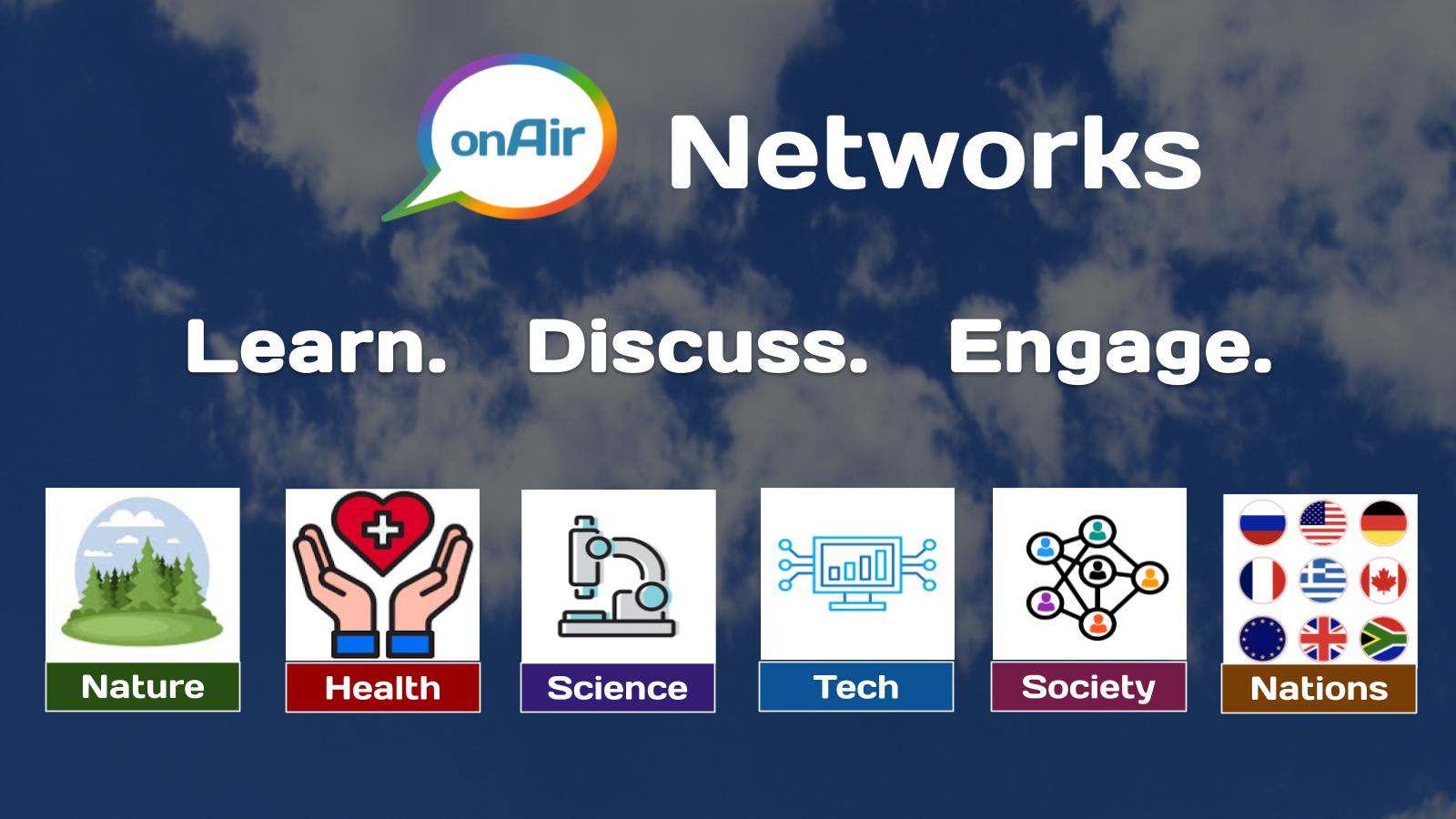
onAir Networks are human-curated, AI-assisted online networks of topical Hubs similar to real world town halls and think tanks.

We bring together professionals, administrators, students and the public to:
LEARN more about a field and advance its knowledge
DISCUSS key challenges
ENGAGE with others to co-create solutions

Together, we can build knowledge-based, trusted, collaborative online communities to create a “People’s Internet” 

  • Where onAir hub members own their content & share their profiles and projects with related hubs without being tracked, algorithmic feeds, or intrusive ads;
  • Where public posts are curated and shared by members without paywalls integrating AI summaries with their own knowledge; spotlighting the latest news, videos, and projects; moderating discussions, and hosting livestreamed interviews and events;
  • Where every person can participate and thrive

Join us & help us reclaim the web. Your voice matters onAir!

Data Engineering on Air

The Data Engineering hub  is focused on bringing together information, experts, organizations, policy makers, and the public to LEARN more about a topic, DISCUSS relevant issues, and COLLABORATE on enhancing research-driven DE knowledge and addressing DE challenges ….  …. where onAir members control where and how their content and conversations are shared free from paywalls, algorithmic feeds, or intrusive ads.

The onAir Knowledge Network is a human-curated, AI-assisted network of hub websites where people share and evolve knowledge on topics of their interest. 

This About the Data Engineering onAir 2 minute video is a good summary of DE hub mission and user experience. 

If you or your organization would like to curate a post within this hub (e.g. a profile post on your organization), contact matthew.kovacev@onair.cc.

To become an onAir member  of this hub, fill in this short form. It’s free!

Source: Other

OnAir Post: Data Engineering on Air

AI2 Nexus

George Mason is building a nexus of collaboration and resources on campus, throughout the region with our vast partnerships, and across the state, called AI2Nexus.
As a model for universities, AI2Nexus is based on four key principles: Integrating AI to transform education, research, and operations; Inspiring with AI to advance higher education and learning for the future workforce; Innovating with AI to lead in responsible AI-enabled discovery and advancements across disciplines; and Impacting with AI to drive partnerships and community engagement for societal adoption and change.

George Mason University is driving rapid AI adoption and advancements across the Commonwealth.

As the largest and most diverse university in Virginia, just outside Washington, D.C., George Mason University is leading the future of inclusive artificial intelligence (AI) and developing responsible models for AI research, education, workforce development, and community engagement within a modern university.

As AI reshapes industries, George Mason combines fearless ideas that harness the technology’s boundless potential to address the world’s grand challenges, while creating guardrails based on informed, transdisciplinary research around ethical governance, regulatory oversight, and social impact.

Led by the university’s inaugural vice president and chief artificial intelligence officer (CAIO) Amarda Shehu with an AI Visioning Task Force, George Mason is reimagining operational excellence in every facet of the university.

Source: AI Webpage

OnAir Post: AI2 Nexus

How to view onAir posts

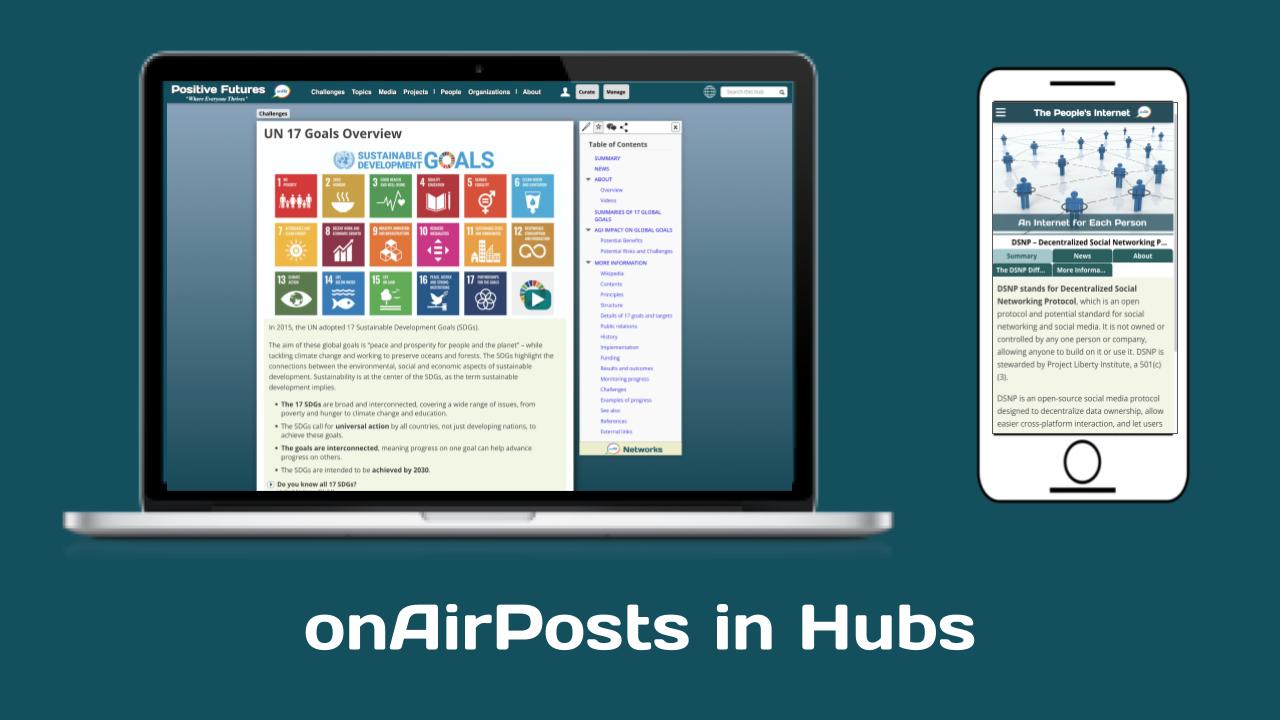
The onAir POST is the key element of the onAir platform. Posts can have content about a topic, person, or organization.  Posts are stored and displayed within a public or custom HUB aggregating the best content on a topic. Public hubs are overseen by the nonprofit onAir Networks and other nonprofits.  Go to About onAir Networks, to learn more about current and planned onAir hubs.

  • Posts are organized in categories and sub-categories in a Hub’s site header and can appear in multiple categories within a hub as well as shared with other hubs;
  • Posts can have, in addition to having text and images, all types of media such as YouTube videos, Google Docs, PDFs, and Wikipedia entries;
  • Posts can also have news items embedded within them such as videos, articles, livestreams, and press releases;
  • Every post author can also have a Comment section for Q&A, feedback, and forum discussion.
  • Posts can be shared via social media and email.
Skip to toolbar